


Your Gut Used To Make Its Own Antioxidant. Then It Stopped.
90X More Potent Than
Bottled Hydrogen Water


Use Daily: One tablet in a glass of water, before food — up to 3 tablets a day.
Use daily for 90 days — the window the money-back guarantee is built around.
When To Take It
One tablet before a meal — up to three a day

Morning Glass
One tablet, one glass, two minutes — ahead of the first meal of the day.
BEST TIME
After waking up, before breakfast

Before Lunch
The meal most people say ends their afternoon.
BEST TIME
20–30 mins before lunch

Before Dinner
Ahead of the evening meal, so the night isn't spent bracing.
BEST TIME
20–30 mins before dinner
Bloating by mid-afternoon. Heaviness after meals you've eaten for thirty years. Years of fibre, probiotics and "just drink more water" — and a stomach that still runs your week.
Molecular hydrogen isn't foreign to your gut — your bacteria ferment it out of fibre. Hydronate delivers it directly, at 12 PPM, in a glass of water.
- Supports A Healthy Gut Lining
- Helps Defend Against Oxidative Stress
- No Added Fermentable Load — No Extra Gas

Hydronate Gut Health Support
80,000+ Verified Reviews

One tablet. One glass. Two minutes, before food.

"I'm a skeptic, and it took two weeks before I noticed anything. What changed was the heavy, useless feeling from about 1:30 to 4pm — the baseline shifted."
Over 200,000 people are in love with Hydronate
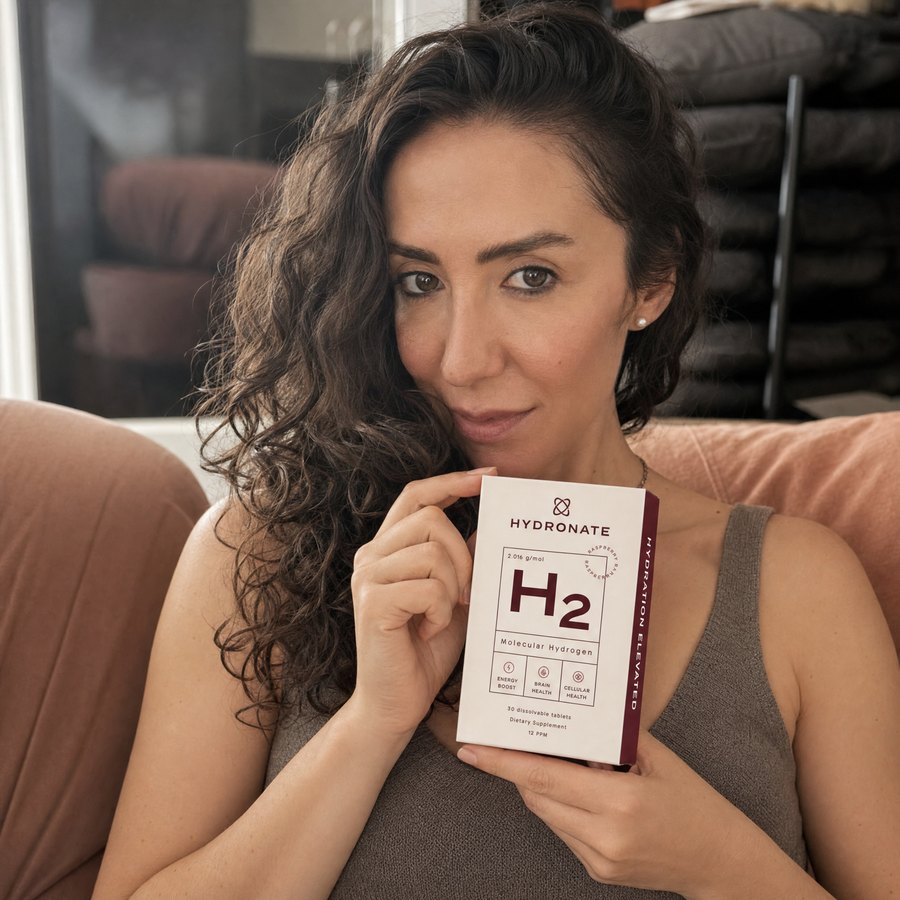
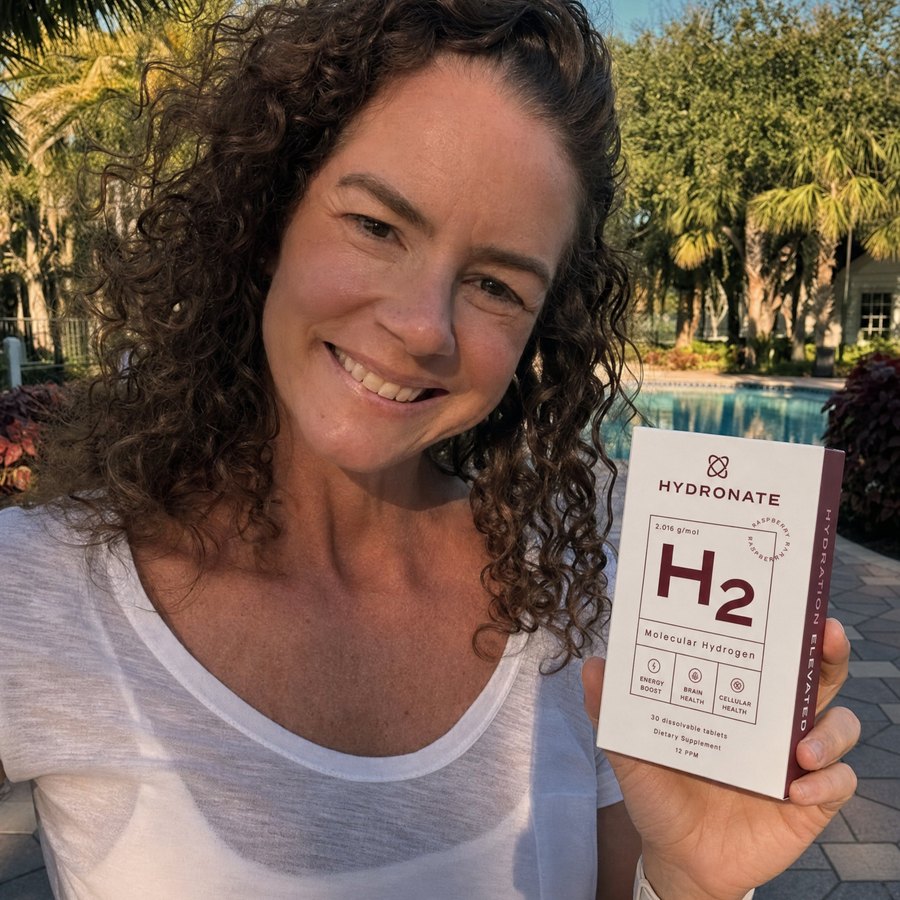
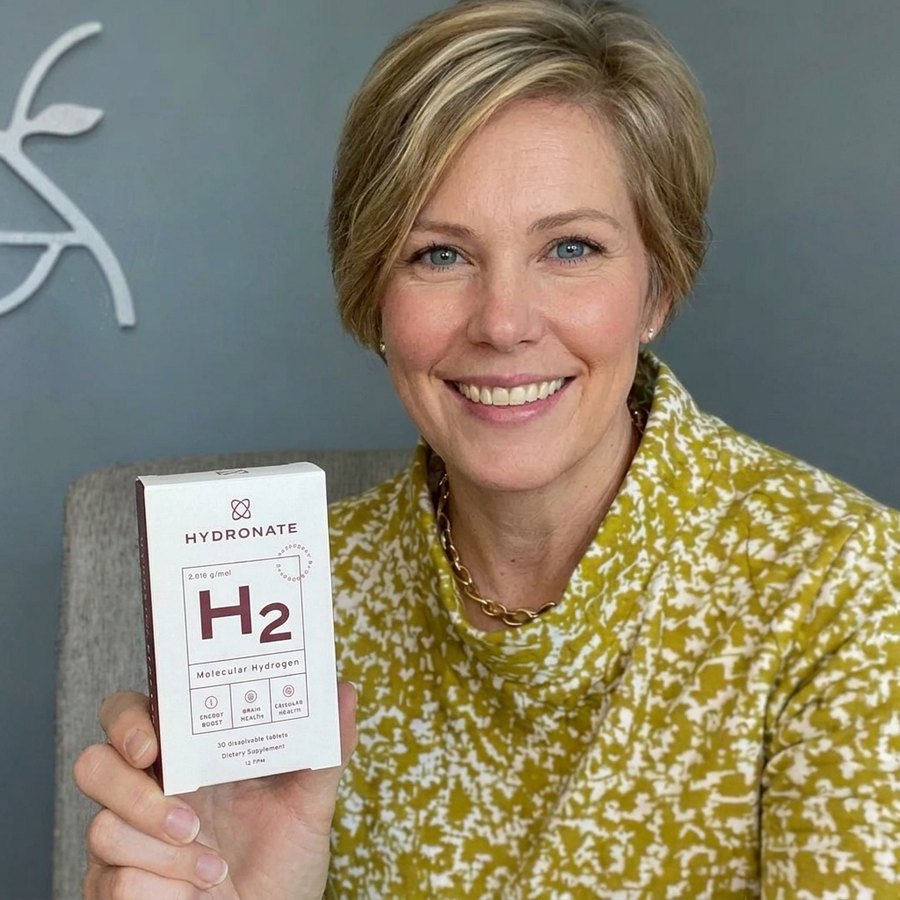

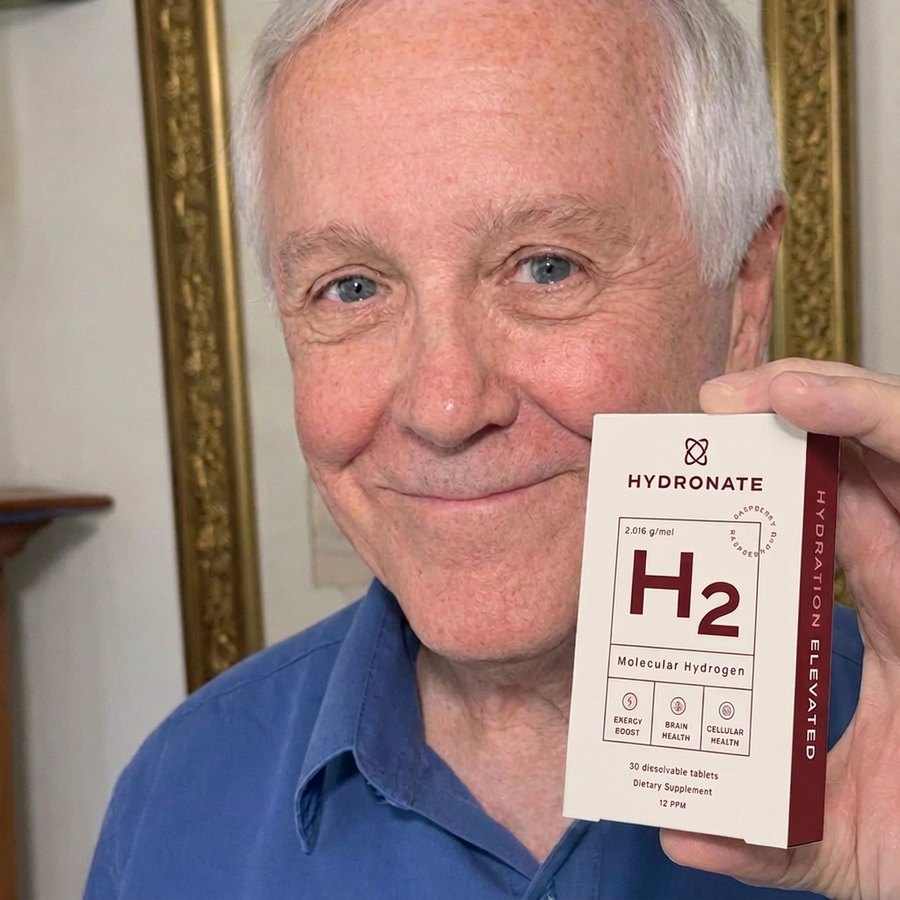
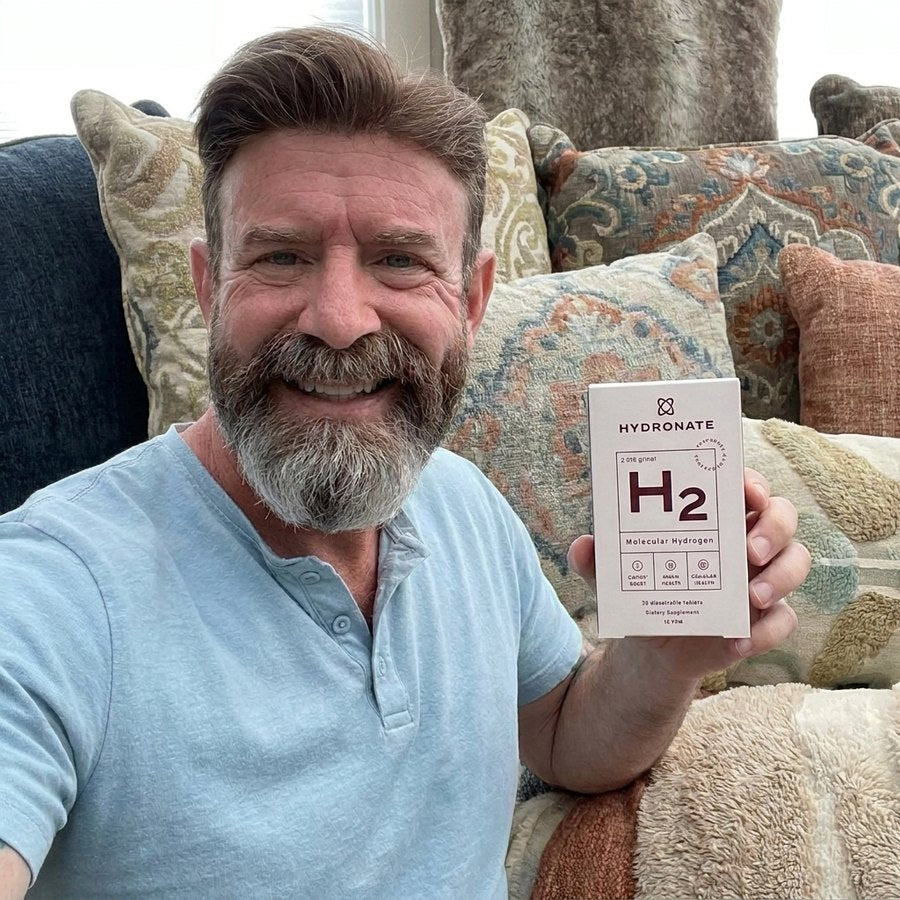
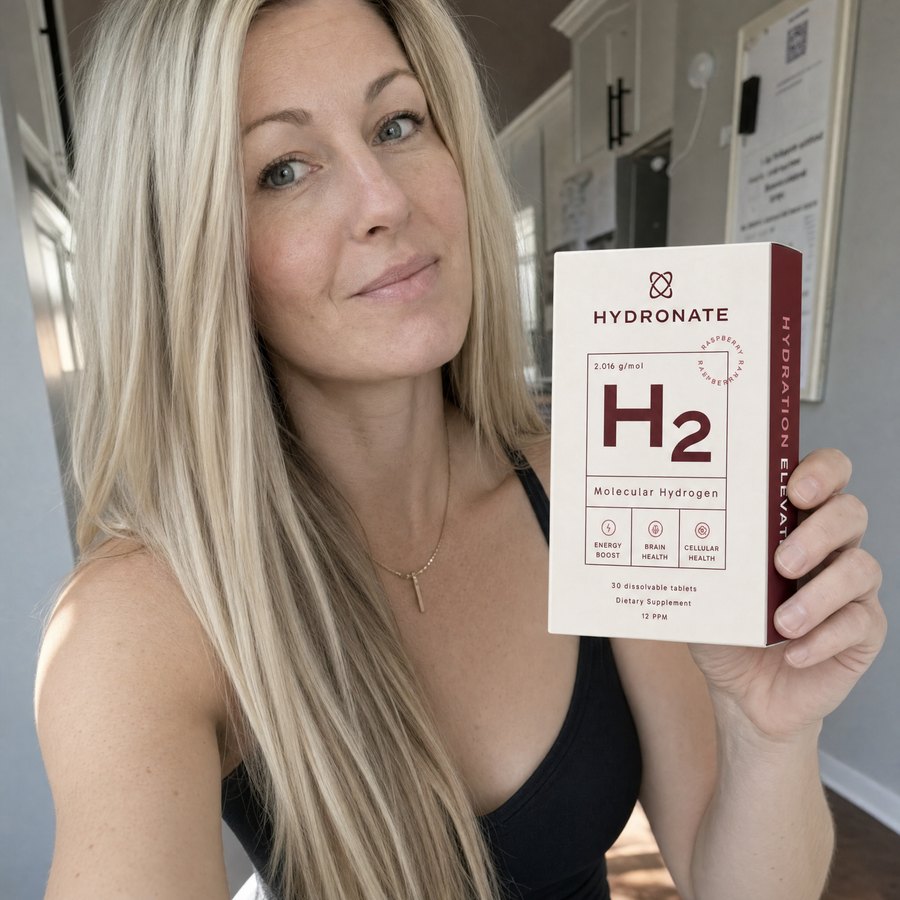
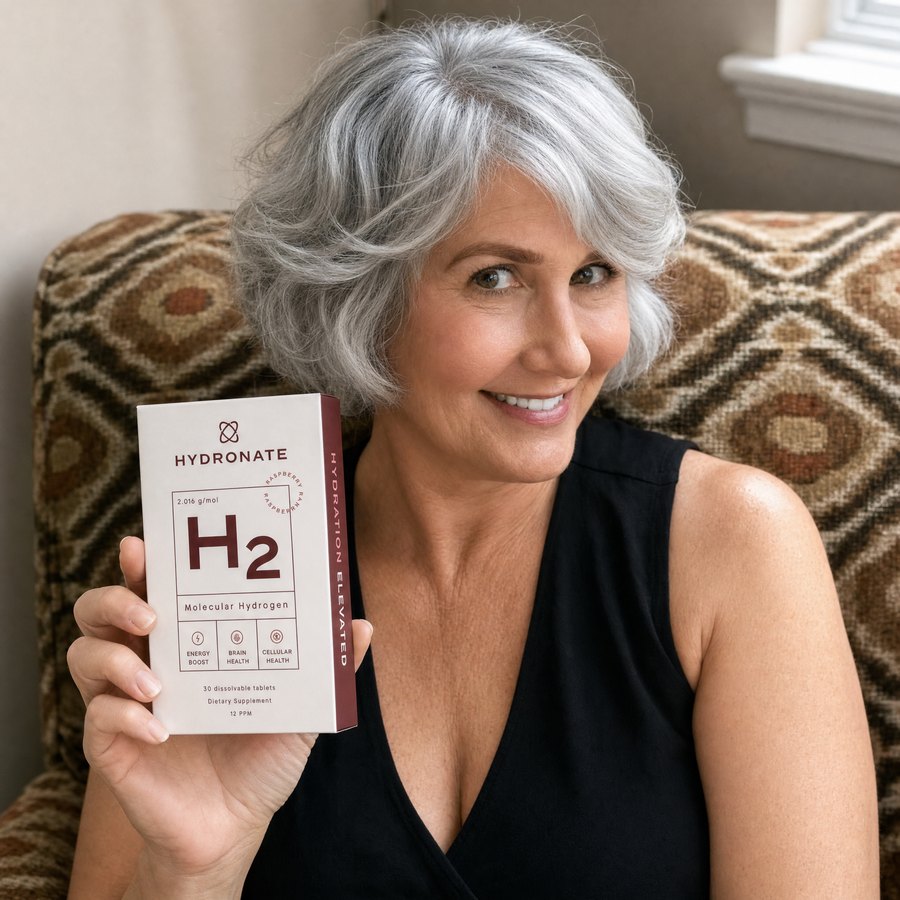
If you're taking fibre and probiotics, here's what they aren't doing.
Fibre is the raw material. Probiotics are passengers - which is why a new one so often works for about a fortnight and then stops: the newcomers pass through rather than establishing in a depleted environment. Neither is the thing your gut actually lost, and on a thinned-out microbiome more fermentable fibre usually means more gas before it means more comfort.
They feed the system.
Fibre is the substrate your bacteria ferment. It's necessary, and it isn't the point of failure — you can eat plenty of it and still be missing the output.
They don't deliver the molecule.
The hydrogen is the by-product that matters. If the species producing it are depleted, adding substrate does not reliably restore the gas - and adding organisms in a capsule does not either, which is the two-week pattern almost everyone recognises.
And they can worsen it first.
Fermentable fibre on a compromised gut is a well-known recipe for distension and discomfort. Plenty of people conclude they've failed at fibre when what they've actually done is feed the wrong thing.
Hydronate skips the fermentation step entirely. The tablet dissolves into hydrogen-rich water at 12 PPM, so the molecule arrives already made — no bacteria required, and nothing extra to ferment.
*Hydronate is a dietary supplement, not a medication, and is not a treatment for any digestive condition. Speak to your doctor about persistent or worsening symptoms.
One tablet. One glass of water. The molecule your microbiome used to make for you.
See pricing & get startedA Molecular Hydrogen Formula for Gut HealthDelivers the Antioxidant Your Microbiome Stopped Making
- 12 PPM dissolved hydrogen per tablet
- No fermentable load, no added gas
- Made & produced in the USA
Delivers the Molecule Directly
Fiber and probiotics work on the bacteria that make hydrogen. Hydronate delivers the hydrogen itself, already dissolved at 12 PPM, so nothing has to ferment first.
Reaches Cells Unaided
At 2 daltons it is the smallest molecule that exists — small enough to cross the gut lining and cell membranes without a transporter.
A Selective Antioxidant
Neutralizes the most damaging radicals while leaving the useful signalling molecules your body depends on alone.
Adds Nothing to Ferment
No senna, no osmotic agent, no prebiotic load. Not a laxative, and nothing to build a dependency on.

Your Microbiome Has Been Making This Molecule All Along
This isn't a new association. Clinical hydrogen breath testing — the standard workup for lactose intolerance and small-intestinal overgrowth — works by measuring the hydrogen your colonic bacteria ferment out of carbohydrate. The gas is already part of your physiology. What varies, person to person and decade to decade, is how much of it your particular microbiome still produces.
A molecule your gut already recognises.
Most antioxidants neutralize everything. Hydrogen is the only one that's selective — and small enough to actually reach the places where your cholesterol oxidizes, your mitochondria starve, and your arteries quietly lose elasticity.
When your gut bacteria ferment the fibre you can't digest, they release short-chain fatty acids — butyrate among them, which colon cells burn as fuel and which supports the tight junctions holding your lining together. They also release hydrogen gas. Everyone talks about the first one. The second is why clinical hydrogen breath testing exists at all.
How much of either by-product you get depends entirely on which species are living there. Courses of antibiotics, years of low-fibre processed food, and the ordinary drift of the microbiome with age all change that population — and beneficial genera like Bifidobacteria and Akkermansia are among the first to thin out. Feed a depleted community more fibre and you don't reliably get more hydrogen. You often just get more gas.
Your intestinal lining replaces itself every few days, sits directly against everything you swallow, and does it in one of the most oxidatively demanding environments in the body. Oxidative stress is well documented in gastrointestinal disease.
Drop it in water and the hydrogen is already dissolved — 12 PPM, absorbed directly, with no bacteria required and nothing additional to ferment. That last part matters: it means no extra gas.
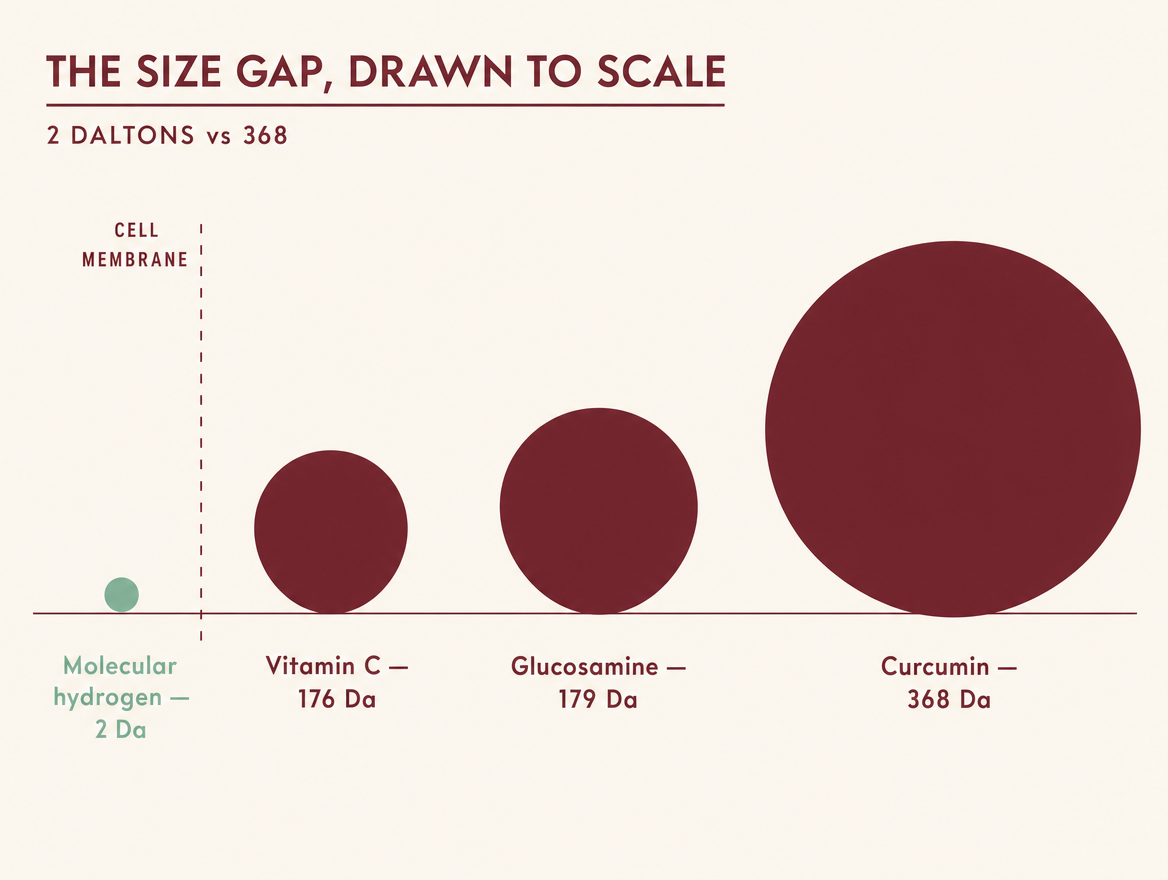
Drawn to scale. Two daltons against 368 - the reason one molecule reaches the inside of a gut cell and most of the supplement shelf never gets close.
Ninety days to judge it on how your afternoons feel — or your money back.
Start the 90-day guaranteeWhat makes Hydronate different.
Fibre and probiotics work on the population producing the molecule. Hydronate works on the molecule. They aren't competitors — but only one of them arrives already made.
“Their colons were never the problem. They were waiting for a signal that had stopped arriving.”
Dr. Raghavan is the narrating clinician of an advertorial Hydronate commissioned; the words below are from that piece. It is branded content — not an independent endorsement, not medical advice, and not a description of a clinical trial. No trial has tested molecular hydrogen as a treatment for chronic bloating.

The first ninety days, honestly.
A daily routine that builds on itself. The subjective effects show up in days. The bloodwork moves over weeks. The compounding happens over months.
Write down your baseline.
What time the heaviness usually starts, and which two or three foods you've been avoiding. That's your before, on paper, the day box one arrives — without it you'll have nothing honest to compare against in six weeks.
Nothing dramatic, and that's expected.
Some people notice their afternoons feel a little lighter in the first week. Most notice nothing at all, which is not a failure — the only job this week is putting the tablet in the glass at the same time each morning.
The post-meal weight is usually first.
The most commonly reported early change isn't the bloating itself — it's the heaviness that follows eating. Meals that used to end the productive part of your day stop doing that quite so reliably. This is the point at which most people decide it's worth finishing the box.
Small and specific.
Not a transformed stomach. Usually something narrower: the waistband at 4pm, or noticing you ate something from the "risky" list and the afternoon went by unremarkably.
The list of safe foods stops running your week.
The change people write in about isn't a symptom score — it's no longer planning around their stomach. Eating before an evening out without doing the mental arithmetic first.
Now you can judge it.
Go back to what you wrote on day zero. If nothing has moved, the guarantee covers it — send the box back and we refund the purchase price.
Hydronate Gut Health Support

Finally stopped planning my afternoons around my stomach
I'm 54 and I've had the 3pm bloat for probably six years. Tried psyllium, two different probiotics, cutting dairy, cutting gluten, cutting FODMAPs. Each thing helped for maybe two weeks and then my stomach went right back to doing whatever it wanted. Didn't notice much the first week. Around day 10–11 I realised I'd eaten lunch and just… kept working. No heaviness. No unbuttoning. By week four I ate Thai food on a Tuesday night — something I would never have done — and woke up fine. I'm on month three now, and my safe-foods list doesn't run my week anymore.

Fibre used to make me worse. This didn't.
I want to explain this to anyone who's been told to just eat more fibre. I tried. For years. Metamucil made me more bloated. Psyllium made me more bloated. My doctor kept saying fibre takes time to adjust, and I kept adjusting for six months and it kept making me miserable. What I like about Hydronate is there's nothing to ferment — nothing sitting in your gut producing gas while you wait for your microbiome to figure it out. First supplement in a decade that didn't make the problem worse before it got better.

No gas. That's the headline.
Every other gut supplement I've tried — fibre, prebiotics, synbiotics — gave me gas. Sometimes worse gas than the problem I was trying to fix. My wife banned me from fibre supplements because the side effects were unbearable for everyone in the house. Hydronate produces zero gas. Zero. Because there's nothing fermenting. That's the whole point, and it's why I've stuck with this for three months when I couldn't last two weeks on anything else.
Week 1 was nothing. Week 3 was everything.
Almost returned it after five days because nothing happened. When you've tried as many things as I have you don't trust timelines anymore. Around day 18–19 something shifted. Ate a normal dinner and the next morning I felt light. Not empty — light. Like my system actually processed the meal overnight instead of holding onto it. By week four it was my new normal. Third box now. I just had to get past week one.
Ate before a flight without anxiety for the first time in years
If you've ever sat in an airport calculating exactly what you can eat so you don't spend four hours miserable in a middle seat, you understand. I used to eat nothing before flying. Literally nothing. Last month I had a sandwich and a coffee before a five-hour flight, sat down, and forgot about my stomach entirely. That hasn't happened in at least four years.
My risky-foods list is almost gone
I used to keep a list in my phone — foods that would guarantee a bad afternoon. Pizza. Indian. Pasta with cream sauce. Anything fried. The list got longer every year. Started in February. By April I'd eaten four things on the list without consequences. By June I deleted the note. I still eat mostly healthy — this isn't a licence to eat garbage — but the constant food anxiety is gone.

Works for bloating. Regularity still a work in progress.
Being straight with you — the bloating improved a lot by week three and my afternoons are genuinely better. But I was also hoping for more regularity improvement, and that's been slower. I'm on week seven and it's better than it was, but not where I want it. Going to finish the 90 days. The bloating improvement alone makes it worth it for me — I just wanted to set honest expectations for anyone who needs help with both.

Solid product, but I wish the tablets dissolved faster
The product works — my bloating has improved significantly over two months, no complaints there. My only gripe is that the tablets take a full two minutes to dissolve and some mornings I'm rushing out the door. Minor, but it's the difference between five stars and four for me. The actual gut results are five stars easily.
Asked & answered.
Have one we haven't covered? Email support@hydronate.com — we read every message and reply within 24 hours.
"It crept away so gradually I didn't notice — my husband was the one who said I hadn't complained about my stomach in weeks. Sometimes that's how you know something's working. It doesn't announce itself."
Yes — they do different jobs. Fibre and probiotics work on the bacterial population; this works on the molecule that population produces. Most people keep both. If you're managing a diagnosed digestive condition, check with your doctor first.
A probiotic adds organisms and hopes they establish and produce. This skips that chain entirely and supplies the hydrogen directly, at a measured 12 PPM, every single glass. It's the difference between planting and delivering.
No. There's no senna, no magnesium citrate, no stimulant and no osmotic agent — nothing that forces a result and nothing your body adapts to, so there's no dependency and nothing to taper off. It works on the oxidative environment of the gut lining, not on forcing motility.
Because it isn't the same category. Fibre is substrate. Probiotics are organisms you hope will establish. Enzymes break down food. All three act on the machinery that produces the molecule — this supplies the molecule itself, already dissolved, at a measured 12 PPM. If the fermenting community is depleted, adding more substrate to it is the one thing that reliably hasn't worked.
Plain water contains no measurable dissolved hydrogen. The tablet puts H₂ into it at 12 PPM. The water is the delivery vehicle — hydrogen is the active molecule.
Almost nobody reports anything in week one. The heaviness after meals is usually the first thing to shift, around week two. The broader change — not planning your day around your stomach — tends to land somewhere in weeks six to twelve.
Molecular hydrogen is well tolerated in the published literature, with no serious adverse events reported at the doses used in human studies. It isn't a stimulant, a laxative or a sedative, and there's nothing to withdraw from. If you're pregnant, nursing, taking medication or managing a medical condition, check with your doctor first.
Take it daily for 90 days. If nothing has changed, send the box back — we refund the full purchase price. No return-shipping fee, no questions.
