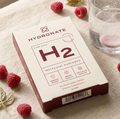
Your doctor's been watching the wrong number.
If the numbers look perfect but the person doesn't — the fog, the stiffness, the afternoons that disappear by 4 PM — you already know something's off.
Your bloodwork tracks total LDL. What actually drives arterial plaque is oxidized LDL — the cholesterol that's been chemically damaged by free radicals. Statins lower the number on the chart. They don't stop the oxidation.
- Helps maintain healthy total cholesterol, HDL & TAG/HDL ratio
- Selectively neutralizes the radicals that oxidize LDL
- Crosses the blood-brain barrier in the first 20 minutes
- Clinically studied at 12+ PPM across 24 weeks of RCT data

"My last lipid panel was the best it's been since my forties. My doctor's the one telling me to keep going."
The slow disappearance.
The grip that used to be firm. Lighter now.
The mind that finished its own sentences. Pausing more.
The energy that used to stretch past sundown. Gone by dinner.
The doctor says the numbers look great. Total cholesterol controlled. LDL right where they want it. Keep taking the medication.
But the chart isn't the person. You are.
You know what aging looks like. This isn't that. Something is being taken — slowly enough that everyone calls it "just getting older." And nobody's running the test that would explain it.
The wrong number's been watched the whole time.
If you're on a statin, here's what it isn't doing.
Statins lower the amount of LDL in your blood. That's the entire mechanism. They don't stop the LDL that remains from being oxidized — and oxidized LDL is the form that embeds in arterial walls and triggers the inflammatory cascade that leads to cardiac events.
It lowers the number.
Statins block HMG-CoA reductase in the liver, which reduces total cholesterol production. The lipid panel improves. The doctor sees a number they like. The chart looks managed.
It doesn't stop the oxidation.
The hydroxyl radicals that chemically damage LDL aren't addressed by statin therapy. The cholesterol that remains stays exposed to the damage that actually drives arterial plaque — under the chart, where no one's looking.
It depletes the heart's fuel.
The same biochemical pathway statins block also produces CoQ10 — the molecule mitochondria use to generate cellular energy. That's why muscle pain, fatigue, and brain fog are the most-reported side effects.
Molecular hydrogen addresses what statins don't: it selectively neutralizes the hydroxyl radicals that oxidize LDL — at the cellular level, where the damage is actually happening.
*Hydronate is a dietary supplement, not a medication. Do not change any prescribed therapy without your physician's guidance.
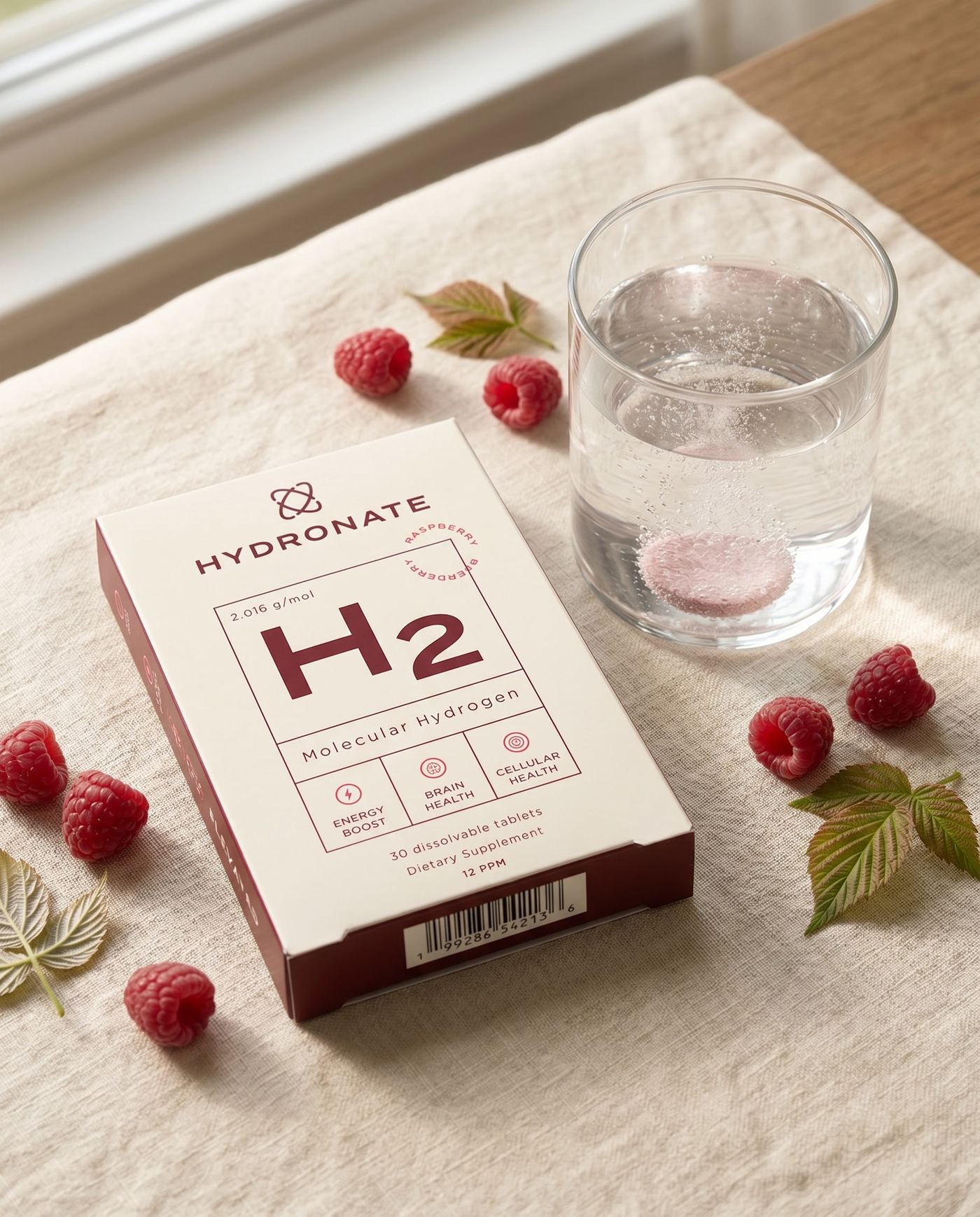
One tablet. One glass of water. The molecule that can reach where statins can't.
See pricing & get startedIf any of this sounds familiar.
- →The hands start aching an hour into the day
- →Sentences trail off mid-thought, then get waved away
- →The recliner wins by 8 PM, every night
- →Garage projects sit unfinished for months
- →The doctor calls the numbers "great." You know they aren't
- →"That's just aging" doesn't match what you're watching
You're not imagining it. And there's a measurement no one's running.
The numbers your doctor was supposed to be watching.
Adults who took the same hydrogen-tablet formulation we produce — for 24 weeks, in a randomized double-blind trial — saw meaningful shifts in the cholesterol markers most likely to be on a recent bloodwork panel.
A different molecule. A different target.
Most antioxidants neutralize everything. Hydrogen is the only one that's selective — and small enough to actually reach the places where your cholesterol oxidizes, your mitochondria starve, and your arteries quietly lose elasticity.
Standard lipid panels track total LDL. What drives arterial plaque is oxidized LDL — and the hydroxyl radicals that cause that oxidation are precisely what molecular hydrogen neutralizes. Selectively. (Ohsawa, Nature Medicine 2007.)
H₂ is the smallest molecule in existence. It crosses cell membranes, the blood-brain barrier, and mitochondrial membranes — places where the damage is happening and where Vitamin C, E, fish oil, and CoQ10 supplements simply can't reach. Peak blood concentration in 5–10 minutes. (Sakai 2014.)
In a 24-week trial of adults with metabolic syndrome, the same hydrogen-tablet IP we produce supported a ~10% drop in total cholesterol, a 22.9% better TAG/HDL ratio, and systolic readings averaging 15 mmHg lower than baseline. (LeBaron 2020 & 2022.)
One molecule. Four targets. The markers your doctor watches most.
Verify it on the next blood draw — or your money back.
Start the 90-day guaranteeDeveloped alongside the scientists who study it.
Hydronate's claim categories were reviewed by a panel of four PhD-level researchers under the FTC's competent-and-reliable-scientific-evidence standard. The cardiovascular claims rest on multiple randomized double-blind human trials.



What makes Hydronate different.
Most antioxidants neutralize everything they touch — including the radicals your cells use to function. Molecular hydrogen is the only known antioxidant that's selective. And it's the only one small enough to actually reach your mitochondria.
"Cardiologist said keep going."
I brought my last labs in and he asked me what I'd changed. I told him about Hydronate. He said — and I quote — "whatever it is, don't stop." First time in fifteen years a cardiologist has told me to keep doing something that wasn't on a prescription pad. My LDL dropped, my HDL came up, and I sleep through the night now. I'm 67 and I feel like I did at 55.

Your timeline
Your first six months on Hydronate
What you may notice in the first days, what your labs show over weeks, and where the 24-week trial landed.

-
20 minutesWhat you'll feel
Clearer head within 20 minutes
Molecular hydrogen reaches peak blood concentration in 5–10 minutes and can cross the blood-brain barrier. Most people describe it as clarity — like someone cleaned a window they didn't know was dirty.
-
Week 1What you'll feel
Steadier energy, better afternoons
The 2pm crash softens. Sleep gets deeper. You stop reaching for the third coffee.
-
Weeks 2–4What you'll feel
Stiffness eases, mornings loosen
The stiffness most people past 45 write off as age. In trials, IL-6 dropped 15.8% and TNF-α dropped 18.75% in this window. You may notice it before your labs do.
-
Weeks 4–8What your labs show
HDL starts moving on your labs
Published trials show HDL rising around 8% and the TC/HDL ratio improving 13% as early as week 4 (Nakao 2010). The first window where the markers your doctor charts may start to shift.
-
Weeks 8–12What your labs show
The 90-day recheck
Total cholesterol and the TC/HDL ratio move more meaningfully; oxidative markers (TBARS, MDA) fall. This is also your guarantee window — if your markers haven’t budged, send the empty box back.
-
Weeks 12–24What compounds
The 24-week results
In the LeBaron 2020/2022 RCT, participants saw around 10% total cholesterol reduction, 22.9% TAG/HDL improvement, and blood pressure move from 127/83 to 112/70 across the full trial window. This is the trial every claim on this page is based on.
Start your upgrade today
Trusted by 200,000+ customers. Join the people who've made Hydronate part of their daily routine. Subscribe today and save up to 60%.
Hydronate Cholesterol Support

Easiest thing I've ever done for my health.
Tried everything — niacin, red yeast rice, krill oil, the carnivore diet. This is the only one I've stuck with because all I do is drop a tablet in my morning water. My grandkids get more of me as a result.

I keep forgetting I'm 61.
BP was 118/74 at my last checkup. Three years ago it was 144/92. I take one tablet every morning with a glass of water before coffee. That's the only thing I've changed. My doctor asked what I was doing differently. I just smiled.

Wife noticed before I did.
She kept saying I looked less puffy in the morning. By month two my doctor's office texted to congratulate me on my new numbers. I thought it was spam. Turned out my HDL had finally moved.

Tastes like a tart sparkling water.
Was bracing for the usual chalky supplement experience — instead it's a raspberry-flavored fizz. I drink it on the way to spin class. Latest A1c was the best it's been in seven years, and the brain fog at 3pm has just… stopped happening.
Cardiologist said keep going.
I brought my last labs in and he asked me what I'd changed. I told him about Hydronate. He said — and I quote — "whatever it is, don't stop." First time in fifteen years a cardiologist has told me to keep doing something that wasn't on a prescription pad.

Took me about a month to feel it.
Was skeptical for the first three weeks. Around week four I noticed I wasn't dragging at 3pm. My latest panel showed cholesterol down 14 points. Not a miracle. Real, though.
Asked & answered.
Have one we haven't covered? Email support@hydronate.com — we read every message and reply within 24 hours.
"Their support team answered a really specific question about my BP medication in under an hour. Felt like talking to a person who actually knew the product."
Hydronate is a dietary supplement, not a medication. Most customers take it alongside whatever their doctor has prescribed. That said, any time you add a new daily supplement, talk to your physician — especially if you're on medication for blood pressure, cholesterol, or blood sugar. Don't change anything prescribed without their guidance.
Subjective effects — energy, sleep quality, mental clarity, less afternoon drag — usually show up in the first 1–2 weeks. Clinically measured changes to HDL begin in published trials around week 4. Total cholesterol, BP, and oxidative-stress markers continue improving through the 24-week trial endpoint.
CoQ10 and fish oil molecules are too large to cross cell membranes effectively. They circulate in the bloodstream but don't reach mitochondria — where statin-induced damage is happening. Molecular hydrogen is the smallest molecule in existence and crosses every membrane, including the blood-brain barrier.
Molecular hydrogen is a gas, and it escapes through plastic, glass, even metal. When you drop a Hydronate tablet into water, magnesium reacts with the water to generate fresh H₂ — 12+ PPM at the moment of absorption. Most hydrogen water you'd buy has lost its concentration before you drink it.
In published trials, HDL begins moving by week 4 (Nakao 2010), total cholesterol and TAG/HDL ratio shift meaningfully by weeks 8–12 (LeBaron 2020), and full trial endpoints appear at 24 weeks. Ask your doctor to add oxidized LDL to the panel — most labs don't run it by default.
Take it daily for 90 days. If the markers haven't moved and you don't feel a clear shift in energy and recovery, send the empty box back. We refund the full purchase price. No return-shipping fee, no questions. Fewer than 2% of customers ever ask.
One tablet. Eight ounces of water. Sixty seconds.
Try Hydronate for 90 days. If your lipid panel hasn't moved, if your BP hasn't budged, if you don't feel a clear shift — send the empty box back and we refund the full purchase price. No return-shipping fee. Less than 2% of customers ever do.